Common Problems of the Nissan Altima, and How to Fix Them
The midsize Nissan Altima was the cool kid of its class back in 2002, debuting all-new styling, an upscale interior, and those cool chrome/clear tail lights (hey, that was a thing back then). Nissan Altima averaged selling over a quarter-million third-generation Altimas each year because it was a great value for the price. Part of that sales success was the excellent options available in engine and transmission choices.
The ’90s Altima earned enthusiast “street cred” with its KA24DE 2.4L engine, shared with the Nissan Altima 240SX, a popular choice for racing, drifting, and later, stance builds. But the 2002 to 2018 Altima’s QR25DE 2.5L is objectively a better engine, with more power, torque, a higher redline, improved fuel savings, fewer emissions, and fewer vibrations thanks to adding balance shafts.

The 2002-2003 Nissan Altima 2.5L was recalled a few times for potentially catastrophic engine damage. One of those involves the pre-catalyst in the exhaust manifold. The recall notice notes that “certain driving conditions can cause the pre-catalyst to overheat and damage the catalyst substrate”, which gets sucked into the combustion chamber and causes serious damage. Nissan Altima also released a Technical Service Bulletin for the power valve screws in the intake manifold. These can come loose and get sucked into the engine, causing extensive damage. Odds are your Altima has received these recall and TSB services already, but it’s a good idea to have it checked out on any Altima you might be buying.
How have they held up over the years? Consumer Reports shows above-average reliability for “major engine problems,” but reports a few issues in the “minor engine troubles” category. Reliability becomes a concern as these cars age, so let’s have a closer look at what commonly goes wrong with an Altima.
(Note: Disconnect the battery and let the engine is cool to the touch before performing any of these maintenance procedures. Or, pretty much anything on the engine of any car.)
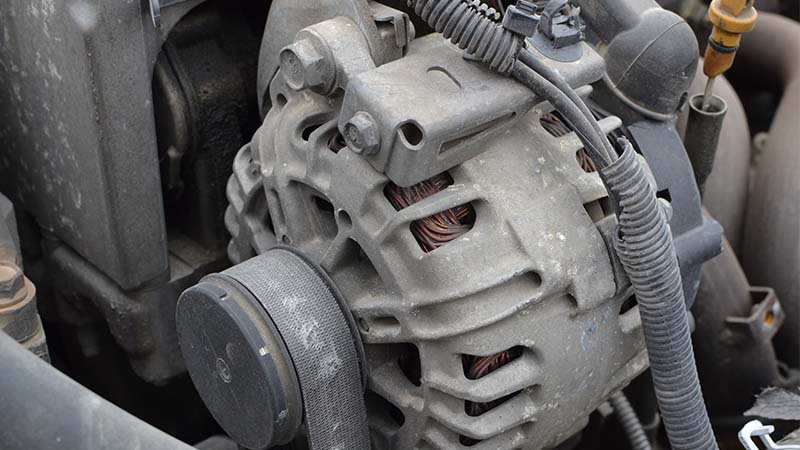
ALTERNATOR
Before you start tearing into the engine bay, consider that your electrical problems may not be due to the alternator. There are a few ways to narrow down electrical problems, from the simple to the more complex, but that should let you know whether you need a new battery or to swap out the alternator. This is an easy task for a total beginner; like with any diagnosis, start with the simplest stuff and move on from there.
Fortunately, replacing the alternator on a four-cylinder Altima is about as easy as it gets since the alternator is within easy reach at the top/front passenger side of the engine bay.
- On the Altima’s 2.5L, simply remove the plastic engine cover and you have access. Use a 5mm hex key on the three bolts holding the cover in place.
- Remove the serpentine belt, and have a close look at the belt to see if it needs replacement.
- Then remove the three electrical connections by pushing a small screwdriver (or your thumbnail) into the tab and pulling the plug out of its socket.
- Then remove the two bolts holding the alternator to the engine mount. They’re long bolts, so use a socket and ratchet set over a standard box wrench.
- Then, the reinstallation of the new/remanufactured alternator is the reverse of the steps above.
Check the belt tensioner, too, especially if you hear a groan or squealing from the alternator while driving. The belt could be too tight, pulling down on the alternator, and prematurely wearing out the bearing.
CRANKSHAFT POSITION SENSOR
The crankshaft position sensor does what its name suggests, sensing the position and/or rotation speed of the crankshaft in real-time and reporting this information to the PCM. The PCM then uses this (and other) info to know which spark plug to fire next, and exactly when. It’s a small, but critical engine component. The symptoms of a failed crank position sensor are usually a check engine light, vibrations, poor performance, stalling, hard starting, and misfires. On the Altima, the CPS fails early due to improper soldering at the factory, where they used too much flux, causing a weak point over the years and miles of vibrations. This was a recall issue, and any new crank position sensor will be better manufactured.
The QR25DE Altima’s crankshaft position sensor is located on the transmission bell housing just below the starter.
You have to remove the air intake tube and then reach down behind the engine near the firewall. Removal is easy, needing just the electrical connection unplugged, and removal of the 10mm retaining bolt. This is easier to view from below. Jack your car up properly, which means using the factory jack point and assistance from a jack stand. Installation of the new sensor is the reverse of removal, finishing by using the ratchet to tighten the bolt until it doesn’t want to go any farther (no recommended torque specs in repair manual). Like with all repairs related to trouble codes, remember to clear the codes in the PCM after the job is done.

IGNITION COILS
While the first generation Altima used a traditional distributor and single-coil, the 2002 and later Altima uses a 2.5L with distributorless ignition. This system places the ignition coils directly on top of the spark plugs, leading to the imaginative name coil-on-plug. The PCM controls the firing of each coil, ideally giving you more power and fewer emissions. Like a separate coil or spark plug wire, coil-on-plug ignition systems are also worn items that need replacing after several years. Failing ignition coils will mean misfire trouble codes related to a specific cylinder and symptoms can include bucking, jerking, rough idle, poor performance, and poor fuel economy.
While you really shouldn’t drive with a failing ignition coil as it can cause more damage, they are easy to replace.
- Start by removing the plastic engine cover. Locate the coils in the center of the valve cover.
- Unplug each coil from the electrical harness by carefully pushing the tab and pulling off the plug.
- Then use a 10mm socket to remove each retaining bolt holding the coil to the valve cover.
- Pull up on the ignition coils and they will come straight out. This may require some force.
- With the coils out, it might be worth it to replace the spark plugs, since that is a quick/easy/affordable job in the same area.
- Apply dielectric grease to the end of the boot, and slide the coil back in until it clicks in place.
VALVE COVER GASKET
Replacing a valve cover gasket on a 2.5L Altima is one of the few times you’ll thank yourself for buying the four-cylinder engine instead of the 3.5L V6. It’s a fairly straightforward task for a beginner, or this service averages a little over $100 in labor through a mechanic. Parts are affordable, with a replacement gasket costing around $10 to $30. With twice as much work and half the engine under the firewall, V6 owners would need skill and patience when performing this task.
While you can just replace the valve cover gasket, note that this won’t be a long term repair. The spark plug tube seals are integrated into the valve cover, and when the valve cover gasket starts to deteriorate from age, the spark plug seals are likely to follow soon. Unfortunately, they aren’t serviceable parts on a QR25DE, so you have to replace the entire valve cover if the spark plug seal fails. Replace just the gasket when on a serious budget, or replace the valve cover, too, for the long term fix.
- To get started, you’ll again have to remove the decorative engine cover (tired of that yet?).
- Remove the PCV hose and throttle cable.
- Disconnect the ignition coils, remove the retaining bolts, and pull the coils off the spark plugs.
- 2007+ models require removal of a few bolts holding a wiring harness in place.
- Then using 18mm and 14mm sockets to remove the giant passenger side top engine mount.
- Then remove all the bolts (10mm again) around the valve cover’s perimeter, and bump it with a rubber mallet to get it dislodged from the old gasket.
- Remove the rest of the gasket from the valve cover, and check the condition of the spark plug seals.
- Clean the sealing surfaces with acetone or brake cleaner and use a gasket scraper to completely remove any traces of gasket material from both mating surfaces.
- Install the valve cover with a new gasket, and use a small amount of engine grade RTV sealant in the corners before lowering onto the cylinder head, making sure the spark plug seals align with the spark plug tubes.
- Tighten the valve cover bolts by hand, starting from closest to the center out to smaller sides last.
- Then torque in the same pattern to 75 in-lbs (~7 lb-ft), and reconnect the rest of the hardware.
STARTER
Few automotive experiences are as annoying as a vehicle that refuses to start when needed. Diagnosing and replacing a starter are also beginner-friendly maintenance tasks. So while you might be late for work today, with a bit of work, your Altima will be back to reliable once again.
- Properly raise the vehicle and use jack stands.
- Remove the air intake tube.
- Disconnect the starter by removing the electrical connection on the starter solenoid (push tab, pull the plug), and remove the link to the battery by removing the bolt with socket & ratchet.
- Then remove the starter mounting bolts. Be careful here as the starter is heavier than it looks. Turning the steering wheel may give you better access.
- The new starter goes back into the same location, but try and line up the starting gears so it goes on easily.
- Torque the longer bolt to 57-72 lb-ft and the shorter bolt to 22-30 lb-ft, and reconnect power.

CAMSHAFT POSITION SENSOR
Here’s our list of the common Altima problems, and continuing the theme, it’s another cheap and easy fix. The symptoms of a failing cam position sensor are similar to a failed crank sensor: rough idle, stalling, misfires, poor gas mileage, and maybe the vehicle will not start. The check engine light is probably on, too. Fortunately, like many automotive sensors, these are affordable and easy to replace. First, you’ll need a new cam position sensor.
To find the CPS on an Altima 2.5L, look to the driver side of the engine, in front of the intake tube, below the valve cover.
- You’ll see two electrical connections going into the cylinder head, and the black one towards the firewall is the cam position sensor. The tab to pull it off is conveniently located on the bottom of the plug, so you’ll have to press it by feel.
- Then there’s another 10mm bolt securing it to the head (are you buying 10mm sockets in bulk yet?). You will probably need to use an extension to reach it.
- Once the bolt is out, the CPS is only held in by the seal. Place a shop rag or towel under the sensor, and jiggle it back and forth until the seal releases and the sensor comes free.
- Use a little oil from the sensor hole to lubricate the new sensor’s seal, then slide in the sensor, and tighten the retaining bolt until it stops.
- Last, reconnect the electrical power, noting that the plug only goes on one way.
Any problems you’ve seen in an Altima? Let us know in the comments if it’s been a reliable ride or a maintenance headache.