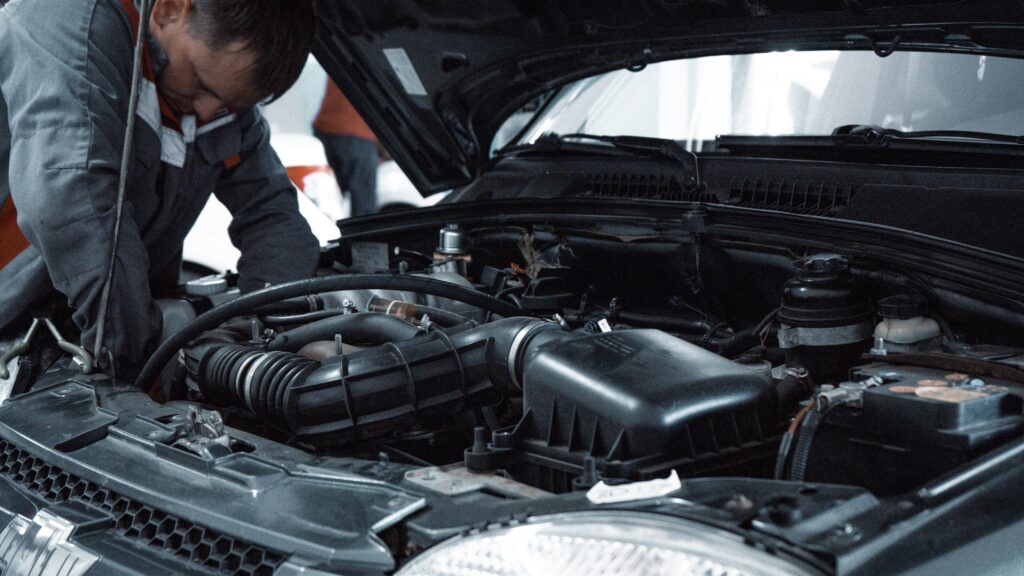
Maintaining the overall health of your car’s cooling system is critical to the vehicle’s overall engine health and performance. Without an effective cooling system, your car’s engine can struggle to run at a safe temperature. Extra care should be taken, especially during the winter and summer when the cooling system works particularly hard.
Car’s cooling: how does it work?
Heat is the fickle friend of the engine. Too much will swell and stick. Too little, and it won’t run efficiently and is on its way to wearing out. While automotive power trains have undergone extensive development in recent years, including turbocharging, downsizing, and hybridization, car cooling is likely to become more compact and compact to improve efficiency and reduce emissions. Other than being faster, little has changed.
How does the cooling system work?
This is what happens when the engine and coolant cool down.
While engine oil is cold and sluggish and does not adequately lubricate the engine’s moving parts, cold temperatures do not evaporate fuel as easily, which is not good when the engine is cold. Therefore, it must be heated quickly. Oddly enough, the cooling system helps. The moment you start your car, the water pump starts pumping cold coolant from the lower tank (basically the bottom) of the radiator to the cold engine block. From here, it travels through channels in the casting to the cylinder head and back to the pump.
Here’s the smart part. A thermostatically controlled valve is located near the pump. If the coolant is too cold, the valve will remain closed, so the coolant will not reach the radiator and be pumped back directly around the engine and cabin heater without being cooled. Coolant helps to warm up the engine quickly, which helps it run more efficiently.
This is what happens when the engine and coolant are hot
The maximum operating temperature of the engine is around 120°C, but when the coolant reaches around 90°C, something magical happens. A thermostatically controlled valve opens, sending hot coolant through the upper radiator hose to the radiator and into the upper radiator tank.
Of course, it’s not magic. In effect, the wax in the thermostat melts and expands, forcing the valve open. This temperature change is monitored by a sensor that relays the data to the car’s engine control unit. The engine control unit continuously fine-tunes the fuel and ignition system as needed. In modern cars, the engine management system controls the thermostat’s operation. This allows for precise coolant temperature control, reducing emissions and increasing efficiency.
How does the car radiator work?
This helps the coolant system heat the engine to keep it from running hot. Like home radiators, car radiators contain a network of tubes that run from the upper tank to the lower tank.
However, unlike your home radiator, your car radiator is a dense mass of thin layers of aluminum in a honeycomb structure surrounding tubes that carry coolant. The coolant transfers heat to the aluminum.
This aluminum layer increases the radiator’s surface area and enhances heat transfer as air passes through the front grille. Coolant can be pumped back into the engine after it flows from the top tank to the bottom.
What does the coolant expansion tank do?
As the coolant temperature increases, it expands, increasing the pressure in the system. The boiling point of the coolant rises above 100°C as the pressure increases, so it’s not as bad as you might think. A pressure cooker can cook at high temperatures without cooking. However, this pressure must be released. Otherwise, the coolant will not be able to enter the radiator, and the system will explode sooner or later.
This is where the second part of the coolant system’s magic happens. A car radiator has a cap or pressure valve that opens when the pressure reaches about 15 psi, allowing more coolant to flow into the expansion mentioned above the tank and relieve pressure.
Being a closed system, it is rarely necessary to unscrew the reservoir filler cap to replenish the coolant level when the engine is cold. Check the level marks on the reservoir side; if the level is low, check the cooling system hoses for leaks. Older systems have an overflow pipe instead of a reservoir, so you have to refill the system from the radiator when it’s cold.
Is the electric cooling fan important?
You may hear a muffled noise when waiting at a traffic light or when you turn off your engine when you reach your destination. An electric fan behind the radiator pulls air in to cool it. It’s controlled by a temperature sensor-but modern cooling systems are so efficient that they’re barely on unless you’re stuck in traffic for a long time with the engine running. An alternative to the electric fan is a viscous coupling driven directly by the engine. Enable or disable the fan as required.
Kwikkar Lewisville, Passion For Excellence, contact us now:+1 (972) 318-0234