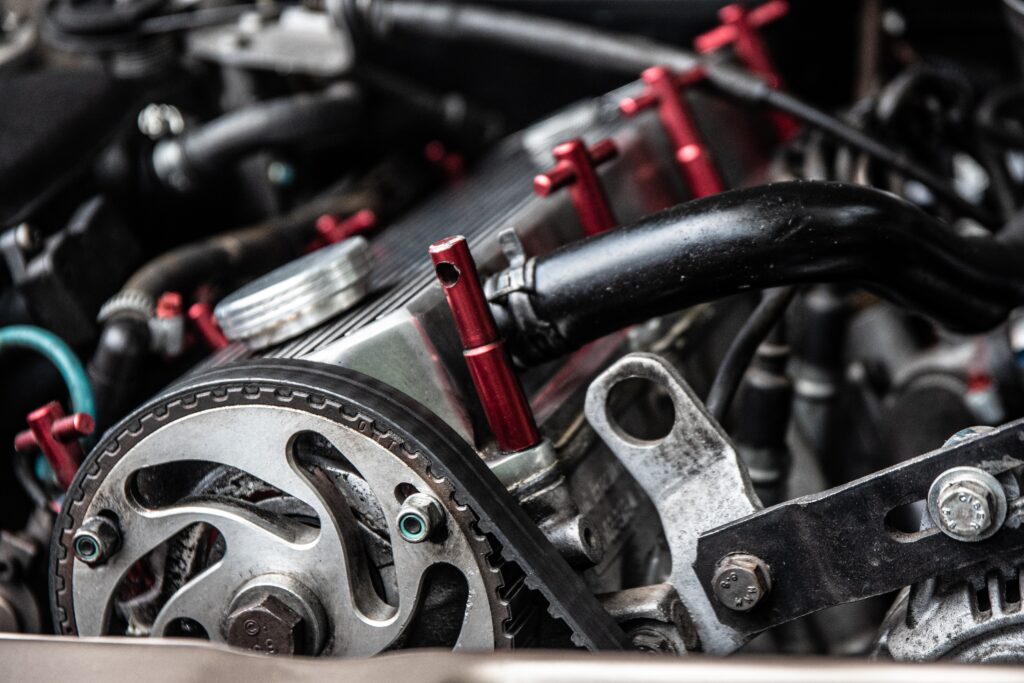
Belts and hoses wear out faster than any other component in your vehicle due to heat, vibration and dirt. That is why regular checks are so important. Your car’s belts and hoses are crucial components that keep the cooling, charging, and air conditioning systems in your engine working properly. The flexible rubber compounds used to make hoses are designed to absorb the vibrations that occur when driving. Here we discuss the types of car belts and hoses and their uses.
1. Timing Belt
The rubber timing belt, which is positioned on the engine’s outside and turns the camshaft when the crankshaft rotates. The engine’s pistons and the camshaft work together to open and close valves. The engine will stop running instantly if the timing belt snaps, which might seriously harm the engine. Although the timing belt may last up to 100,000 miles, make sure you have it examined frequently.Timing belts are not standard equipment on all automobiles. Some people make use of an engine-based timing chain. In contrast to a timing belt, a timing chain is made of steel, requires no upkeep, and is lubricated by engine oil.Timing chains often last much longer than timing belts, but they can and do wear out. The best way to maintain your timing chain is to do regular oil changes.
2. Serpentine Belt
Drive belts, commonly known as serpentine belts, power critical components such as air conditioning compressors, power steering pumps and cooling fans. Due to their rubber composition and excessive exposure to dryness, heat and cold, today’s serpentine belts are less likely to stretch or slip, but they do wear out over time. If the belt breaks, the vehicle will continue to run, but the water pump will not be powered and the engine will run the risk of overheating. When the V-belt fails, it becomes difficult to steer, the thermometer shows that the vehicle is getting hotter, and you may notice that the air conditioner is having trouble producing cool air.Serpentine belts should be checked regularly and most are replaced after about 50,000 miles.
3. Hoses
Vehicle hoses connect to radiators, heaters, fuel lines, vacuum lines, air conditioning and power steering. The section of hose connected to the engine is flexible and absorbs vibrations from the vehicle. Most of the time the hose wears from the inside and looks stiff from the outside. Drying can affect rubber and cause it to break. It is recommended to replace the hose every 80,000km, but please check regularly for cracks, damage, and dryness.
Car fluid hoses are made of two layers of rubber with a layer of fabric in between. A typical hose is:
- Radiator and Heater Hoses – These hoses carry coolant to the engine and heater core.
- Fuel Hose – As the name suggests, this hose carries fuel from the tank to the engine.
- Power Steering Hose – Connects the power steering pump to the steering box.
4.Timing Belt For Cars and Trucks
Your timing belt plays a crucial role in the dependability and safety of your car. It is therefore in your best advantage to have your car serviced as soon as possible if you have driven far enough to require a timing belt replacement.
Your car will continue to run as it should if your belts and hoses are regularly inspected. Check your car’s belts and hoses by visiting us at Kwikkar Lewisville, Passion For Excellence, contact us now:+1 (972) 318-0234